How to boost your Local Ranking – Local SEO?

Are you a local business owner looking to attract customers in a specific geographic area? Then fix with local SEO, that can help businesses optimize their online presence and boost their local ranking in search engine results. From optimizing Google My Business listings to implementing targeted keywords, there are numerous strategies that businesses can employ to improve their local visibility. This blog will explore some essential local SEO strategies that businesses can use to increase their online visibility and attract more local customers to boost your local ranking.

Importance of local SEO for Local Ranking

Importance of local SEO for Local Ranking

With the increasing competition in local markets, it is important for small businesses to optimize their online presence and local visibility in order to attract more local customers. Here is some reasons why local SEO is important for Local ranking.

  • Local SEO allows small businesses to target specific geographical areas and reach potential customers who are located nearby
  • Implementing local SEO strategies helps small businesses to appear in local search results, increasing their visibility to potential customers
  • Having a strong online presence and appearing in local search results builds trust and credibility among potential customers.
  • People often search for products or services on their mobile devices or through voice search, and optimizing for local SEO helps small businesses to appear in these search results.
  • Local SEO provides an opportunity for small businesses to compete with larger businesses in their local area.

How to optimize your website for Local Ranking?

Optimizing your website for local search is an essential step in boosting your local ranking and driving more targeted traffic to your small business.

1. Localize your website content

Include relevant keywords and phrases that are specific to your local area throughout your website content. This will help search engines understand the geographical relevance of your website and improve its visibility in local search results.

2. Create location-specific landing pages

Create specific landing pages for each business location, if you have multiple business locations. These pages should include unique and localized content, such as address, phone number, business hours, testimonials, and promotions. This will help search engines identify the specific locations you serve and increase your chances of appearing in local search results.

How to optimize your website for Local Ranking

3. Optimize your meta tags and URL structure

 Ensure that your meta tags, including title tags and meta descriptions, contain relevant keywords and accurately describe the content of each page. Include your location in the URL structure of your web pages, if possible. This will further enhance the local relevance of your website and improve its visibility in local search results.

4. Claim and optimize your Google My Business listing

Google My Business is a free and powerful tool that allows you to manage your business information and appear in Google Maps and local search results. Claim your Google My Business listing and ensure that all information, such as your business name, address, phone number, and website URL, is accurate and up to date. Additionally, encourage customers to leave reviews on your Google My Business page, as positive reviews can significantly improve your local ranking.

5. Build local citations and backlinks

Mention your business name, address, and phone number on other local websites, directories, and social media platforms. Building consistent and accurate local citations across reputable websites can boost your local SEO efforts. Additionally, acquiring backlinks from local websites and relevant industry directories can further enhance your local search visibility.

6. Optimize for mobile and voice search

With the increasing use of smartphones and voice assistants, it is crucial to ensure that your website is mobile-friendly and optimized for voice search. Make sure your website loads quickly, is easy to navigate on mobile devices, and provides a seamless user experience. Additionally, consider optimizing your content for voice search by including natural language queries and long-tail keywords.

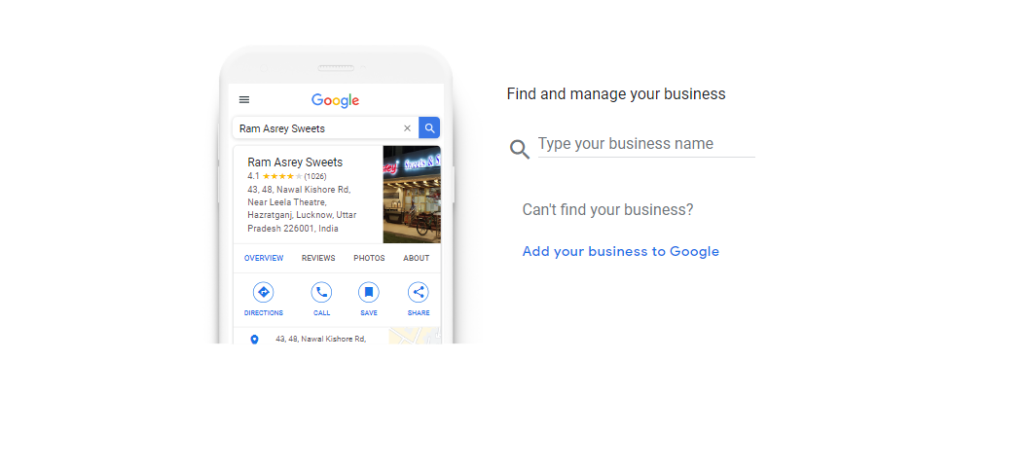
Google My Business listing for Local Ranking
Google My Business listing for Local Ranking

Claiming and optimizing your Google My Business listing is an important step in improving your local SEO and increasing your visibility in Google Maps and local search results. 

Step 1: Claim your listing

Google My Business listing is the first process if you are looking forward to increasing your local ranking. Visit the Google My Business website and follow the instructions to verify and claim ownership of your business. This will give you control over the information displayed about your business on Google.Claim your business

Step 2: Provide accurate information

Once you have claimed your listing, it’s crucial to provide accurate and complete information about your business. This includes your business name, address, phone number (NAP), website URL, business hours, and a brief description of your offerings. Make sure all this information is up to-date and consistent across all online platforms.

Step 3: Choose relevant categories

Google My Business allows you to choose categories that best describe your business. Select the most relevant categories that accurately represent your products or services. This will help Google understand your business and display it in relevant searches.

Step 4:  Add high-quality photos

Including high-quality photos of your business, products, and services can significantly improve your listing’s visibility and attractiveness to potential customers. Make sure the photos showcase your business in the best light and accurately represent what you offer.

Step 5: Utilize Google Posts

Google Posts allow you to share updates, offers, and announcements directly on your Google My Business listing. Take advantage of this feature to keep your audience informed about new products, events, or promotions. These posts can help attract more traffic and increase engagement with your business.

Some of the key points that helps to increase your local Ranking

  • List your business on industry-specific directories
  • Seek local partnerships and collaborations
  • Encourage online reviews and testimonials
  • Guest blogging on local websites
  • Create location-specific landing pages
  • Include location-specific information in your content
  • Set up Google Analytics and Google Search Console
  • Track online reviews and ratings

In addition to all, regularly monitor and track your efforts using tools like Google Analytics and Google Search Console to stay informed about your performance and make data-driven decisions. With consistent effort and strategic execution, you can boost your local SEO and achieve long-term success for your business.


Google My Business Profile – How To Optimise It Best For Local SEO?

A Google My Business Profile is a free tool from Google that aids business owners in managing their online presence across the search engine and a growing number of its services, such as Google Maps. This blog will give a detailed explanation of Google My Business Profile and the optimisation process of this for local SEO.

What is Google My Business Profile?

What is Google My Business Profile?

It’s important to note that Google recently changed the name of its service from Google My Business to Google Business Profile before we get started. Although it now goes by a different name, Google Business Profile is still your one-stop shop for controlling the information about your company and how it will be displayed in search results.

It is a crucial tool for modifying how Google Maps, the Knowledge Graph, and organic search results display information about your company. The most recent Local Search Ranking Factors Survey shows that reviews come second to Google My Business as the most significant influencer of local SEO success.

You can edit your company listing by adding NAP information, business hours, photos, etc. Even unusual choices demonstrate various shopping options (delivery or store pickup). You also have access to many other options, such as controlling the feedback your clients leave. Reviews should be a crucial component of your local SEO efforts, as you may already be aware.

How does it work?

How does Google My Business work?

Making an account and claiming your business are the only two steps to begin using Google Business Profile. After providing your information, Google will send a physical postcard to the address you provided. They send you this card to ensure you’re being truthful and are the company’s owner listed at the address. There are exceptions, and some companies can be confirmed by phone or email.

Once verified, you can enter all the required information and monitor the performance of your listing. In addition, you can receive regular insights to see how many impressions, clicks, and subscribers your listing received over time. It’s a great way to learn how Google and your customers view your company.

Why is Google My Business Important?

An optimised Google My Business profile can help your company in some ways, including the following.

To Engage with more Users

People who search for businesses frequently see your company’s Google My Business listing. It represents your brand and, depending on the details and assets included in the listing, can influence how customers perceive your business.

Having current information and utilising all features (uploading photos, goods, services, Google posts, etc.) creates a positive user experience and aids businesses in informing their clients.

To Boost Local Ranking

Well, it all begins with these three crucial elements, which Google mainly takes into account when determining local search results:

Relevance: This term describes how closely a local business profile’s data corresponds to a user’s search query.

Distance: Takes into account the distance between each search result and the location term used in the search query. If no location is specified, Google will determine the distance based on its understanding of the user’s location.

Prominence: The business’s prominence indicates how well-known it is. This factor also depends on the data Google has on a company (backlinks, reviews, articles, etc.).

The Practices to optimise it best for the Local SEO

The Practices to optimise it best for the Local SEO

Having an optimised, current Google My Business listing is more crucial than ever as the digital landscape changes constantly. Your business profile is essential for satisfying the needs of your existing customers and enhancing your online presence to draw in new ones, regardless of whether you operate locally or on a much larger scale.

If you want to increase your organic presence and generate quality leads, it takes more than just creating a Business Profile or claiming an existing listing. Here are a few Google My Business best practices and optimisations to help you increase engagement and your Search Engine Optimization ranking.

Complete Data on your Business Profile

First and foremost, you should include all relevant contact details for your company, including name, address, phone number, website, and opening times. In addition to helping Google rank your business higher in local search results, having a complete business profile increases the number of actions potential customers can take after discovering your profile.

Make sure the details in each section match those on your website, social media profiles, and other listings as you complete them. Although it might seem obvious, even minor inconsistencies, such as using “Street” on your website address but “St” on your listing address, can cause Google to raise an alert. Consistent Name, Address, and Phone (NAP) data are among the most important ranking factors in Local SEO.

Sharing Business Operating Hours

Sharing Business Operating Hours

It is not surprising that we now research everything we do on Google first. For instance, before going to a restaurant, you would research it online and look up its opening and closing times. By doing this, you can mentally prepare yourself for what to anticipate and when. This is why Google My Business’s feature is useful.

Since you can also add your business opening and closing time, it helps to make things easier for the customers. They are, therefore, aware of the days you will be available, the time you will be available, and when there will be the most incredible rush.

Create a Business Description

One of the most crucial elements of your listing is the business description because it informs users about the nature of your company and boosts your company’s SEO. A good business description follows Google’s rules, uses relevant information about the company, and includes essential search terms (Information about the company’s history, what makes it unique, the products and services it offers, and other information that is useful to customers).

Add Business Products

The Google My Business product editor feature is a fantastic tool for enhancing your company’s online presence by showcasing your products and encouraging customer interaction. For example, product title, photo, description, and price are just a few details that can be included for potential customers when featured on a business profile.

Another option is to add a Call To Action (CTA) button that directs users to the product page.

Call To Action

Add Business categories

Google provides over 3,000 categories for companies to describe themselves, ranging from “accounting firm” to “website designer.” Customers can use these categories to find precise, targeted results for the services they need. One primary category and several subcategories can be assigned to a business profile. The individual can add up to 9 subcategories.

It is crucial to choose a primary Google My Business category that accurately represents the company as a whole because many local SEO experts believe it to be the most essential local pack ranking factor. To ensure that all of your various departments and services are represented, be as specific as you can when selecting your primary category and make use of subcategories.

For example, a grocery store might select “Grocery Store” as its primary category and add the subcategories “Pharmacy” and “Deli” as additional options.

Create Blog Posts

Google introduced the option to add posts to your business listing to maintain a consistently updated platform, sometimes in real-time. This straightforward, functional, and appealing feature of Google My Business will help you with marketing, advertising, and SEO.

The user can share their most recent offerings using this feature. In addition, you can advertise your company’s services to people directly by clicking posts on the Google My Business dashboard. Not to mention, locally relevant content is essential for boosting local SEO.

Manage Reviews

Manage Reviews

An essential component of any business is its reviews. It is one of the most crucial aspects of managing your brand’s online reputation. Therefore, having a system in place that makes it simple for you to view and respond to reviews is ideal because prompt responses, even to some negative reviews, will increase consumer trust in your brand.

The Google My Business managing review component enters the picture at this point. You can manage customer reviews by responding to them directly on the dashboard.

Conclusion

As well as, Google Business Profile is a great tool and a significant strategy for SEO, remember that Google My Business (also known as Google Business Profile) is not a one-size-fits-all solution for local SEO. It must complement your other off-page and on-page SEO initiatives. If your profile is reliable, you won’t likely move up the rankings, but you also will only succeed with a properly optimised website and regionalised content. These things are related.