What is Ecommerce Content Marketing and How to Get Started?

E-commerce has revolutionized the way businesses operate and connect with customers. In this digital era, traditional marketing strategies are rapidly being replaced by innovative approaches to engage and attract online consumers. One such powerful technique is e-commerce content marketing.

E-commerce content marketing involves creating and distributing valuable, relevant, and consistent content to attract and retain a target audience. But how do you get started with e-commerce content marketing? In this guide, we will explore the essentials of this strategy and provide actionable steps to help you embark on a successful journey.

What is Content Marketing?

What is Ecommerce Content Marketing and How to Get Started?

An approach called content marketing focuses on producing and disseminating useful, timely, and consistent material in order to draw in and engage a target audience. It revolves around providing useful information, entertaining stories, and insightful experiences that resonate with individuals.

The goal of content marketing is to establish trust, build brand awareness, drive customer loyalty, and ultimately, generate profitable actions for a business. It involves crafting content in various formats such as blog posts, videos, social media posts, infographics, and more to cater to different platforms and preferences.

Why Do Ecommerce Companies Need Content Marketing?

Whatever you’re selling, content should be a major part of your marketing strategy. By producing and disseminating valuable, free information, potential customers build trust. Clients are kept motivated and given content for social media sharing, in addition.

Additionally, content marketing helps to draw in and turn potential customers into devoted ones.

What is E-Commerce Content Marketing?

To increase online sales, content marketing for e-commerce focuses on assisting the customer throughout the buying process.

A successful approach incorporates useful content into every step of the customer journey, guaranteeing that prospective customers can get the information they require whenever they need it and via the appropriate channel.

The value that content for e-commerce websites provides to its audience sets it apart from other content. E-commerce content can be valuable in the following ways, as examples:

  • Video tutorials explaining how specific processes function
  • Photos of a product in high-resolution
  • Using online discussion boards to find solutions
  • Blog entries about topics of interest to purchasers that are optimized for search

Why Ecommerce Marketing is Important?

Ecommerce marketing is important because it helps businesses reach a wider audience, increase sales, and build brand awareness.

Here are some of the key reasons why Ecommerce marketing is so important:

  • Reach a wider audience: With Ecommerce marketing, businesses can reach a global audience 24/7.
  • Increase sales: Ecommerce marketing can help businesses increase sales by driving traffic to their websites and converting visitors into customers.
  • Build brand awareness: Ecommerce marketing can help businesses build brand awareness by creating positive associations with their brand in the minds of consumers.
  • Compete with larger businesses: Ecommerce marketing can help small businesses compete with larger businesses by giving them access to the same marketing channels.
  • Track results: Ecommerce marketing is a measurable marketing channel, which means that businesses can track the results of their campaigns and make adjustments as needed.

How to Get Started with Ecommerce Content Marketing?

E-commerce content marketing strategies play a crucial role in driving traffic, increasing conversions, and building a strong online presence. Here are some effective strategies to consider:

Create a Content Hub

Creating a content hub for your e-commerce business is an effective strategy to centralize your quality content and provide a seamless experience for your audience. A content hub serves as a one-stop destination where customers can find a wealth of information, resources, and engaging content related to your products or industry. It allows you to showcase your expertise, build trust, and keep customers engaged for longer periods.

By organizing your content in a user-friendly manner, with clear navigation and intuitive design, you create a hub that becomes a go-to resource for your target audience.

Create Topical SEO Clusters for Blog

Using topic clusters can significantly increase the effectiveness and conversion rates of organic search. A topic cluster is a hub-and-spoke arrangement of content organized around a central idea. The website’s centre and anchor is a pillar page. Usually, the additional pages in a topic cluster are blog posts that cover related subjects.

The pillar post gives a high-level summary of each subject in the subject cluster and links to all of the supporting posts in the cluster. Each of the supporting pages has a connection back to the pillar page as well as an internal link to one of the cluster pages.

User Generated Content

User-generated content is an additional content marketing method for e-commerce that is particularly successful because it frequently features actual customers utilizing your goods. It serves as social evidence and word-of-mouth marketing at the same time. People are much more likely to believe what real customers have to say about your products, even though they might not necessarily believe what you say about your items.

Create a Glossary of Terms

If your items use obscure phrases, creating a glossary can be a very effective type of Ecommerce content marketing. It provides a centralized location for your customers to learn about your product and the lingo used to describe it.

A dictionary can be a helpful SEO strategy and attract site visitors who are looking for a specific phrase. They are likely to browse your website and buy what you have to offer because your product directly corresponds to their search.

Infographics

Infographics are a useful tool for visualizing information and making it simpler to understand. Infographics can be used to help potential consumers better understand their pain spots and how your solutions can help alleviate them during the education stage of the buyer’s journey.

Tutorial Videos

The use of YouTube to acquire new skills is growing, and tutorial videos are becoming more and more popular. You may capitalize on this trend by creating video content that shows viewers how to utilize your products to solve specific problems or challenges.

Reviews and Comparisons

Reviews and Comparisons

Your audience can see social proof of the high calibre of your product online reviews. Ninety-three percent (93%) of shoppers claim that online reviews influence their choice of product. Eighty-two percent (82%) of shoppers go out of their way to read customer evaluations before making a purchase.

It is obvious that including reviews on your e-commerce website might increase conversions.

FAQ Pages

Although FAQ pages may not be the most glamorous type of content in digital marketing, Ecommerce firms can benefit greatly from using them.

Inevitably, both potential and present customers will have questions regarding your products. On a FAQ page, you may help your present clients while also responding to the questions of new customers.

Content Amplification

If no one sees your content marketing, it has no ROI. After a post has been published, you should concentrate on content amplification to spread its word to as many members of your target audience as you can.

Conclusion

E-commerce content marketing is a vital component of any successful online business strategy. It allows you to engage with your target audience, build brand awareness, and ultimately drive sales. By producing valuable and relevant content, you can position yourself as an authority in your industry and establish long-term relationships with customers.

So, take the insights and tips shared in this guide, adapt them to your specific business needs, and embark on your e-commerce content marketing journey. With dedication and strategic implementation, you’ll be well on your way to boosting your online presence, engaging customers, and driving growth for your e-commerce business.

Competitor research for choosing a best seo content

Effective search engine optimization (SEO) requires in-depth research into your competitors’ online strategies. Competitor analysis provides valuable insights into their strengths and weaknesses, allowing you to identify opportunities for your own content. But conducting such research can be time-consuming and labor-intensive without the right tools. This is where Ahrefs comes in – a SEO tool that provides rich data on your competitors’ online activities. In this blog, we provide you a step-by-step guide to conducting thorough competitor research using Ahrefs, enabling you to create enhanced SEO content that stands out from the competition

Importance of conducting competitor research

Competitor research is important for developing strong SEO content that can rank higher in search engine results. By examining your competitors’ online activities, you can gain valuable insights into their strengths and weaknesses, identify their target audience, understand their content strategy, and find new opportunities for your own content

Competitor research can help you to:

  1. Identify your competition: By examining your competitors’ website and online activities, you can create a list of direct and indirect competitors. This can give you an idea of who you are up against and what strategies they are using to outrank you.
  2. Analyze their keywords: By using a tool like Ahrefs, you can track your competitor’s keyword usage and identify gaps and opportunities for your own content.
  3. Analyze their content: By analyzing the type of content your competitors are producing, you can understand what is working for them and what is not. You can then create better content that caters to your target audience.
  4. Improve your link-building strategy: By analyzing your competitors’ backlinks, you can learn where they are getting their links from, the quality of the links, and what kind of content they are using to get links. You can then develop a better link-building strategy to outrank them.
  5. Stay ahead of the competition: By continuously monitoring your competitors’ online activities, you can stay ahead of them by identifying new trends and opportunities. This will help you to improve your SEO content and keep your rankings high in search engine results.Importance of conducting competitor research

Your competitors are the great source for SEO performance. By analyzing your competitors profile you can easily choose a best SEO content for your website to drive more traffic.

By performing an in-depth SEO competitor research, you can get your competitors’ content strategies in detail.

Here are steps to understanding your competitors’ content strategies:

  1. Identify the type of content they are producing: Start by identifying the type of content your competitors are producing. Are they primarily producing blog posts, videos, or infographics? By understanding the type of content they are creating, you can start to identify the formats that resonate most with your target audience.
  2. Analyze their content quality: Once you have identified the type of content your competitors are producing, it’s important to analyze the quality of their content. Look at factors such as the readability, relevance, length, and engagement of their content. This will help you to understand what type of content your target audience is engaging with the most.
  3. Identify gaps in their content: After analyzing your competitors’ content, identify any gaps that exist in the type of content they are producing. Consider topics they may not have covered or formats they are not utilizing. This can help you to create content that is more tailored to your target audience’s interests.
  4. Analyze their content promotion: It’s important to also analyze how your competitors are promoting their content. Are they utilizing social media platforms, email marketing, or paid advertising? Understanding their promotional strategy can help you to develop a better content distribution plan for your own content.

Lets start with Arefs to analyze your competitors profile and to get the best SEO content.

Competitor Research using Ahrefs for choosing a best SEO content

To identify competitors using Ahrefs, you can start by entering your own website’s domain into the Ahrefs search bar. Analyze the data provided, such as referring domains, organic keywords, and organic traffic, to gain insights into your website’s performance.

Next, explore the top-ranking keywords driving traffic to your website and examine the websites that rank well for those keywords.

Look for similarities in products, services, target audience, and industry to determine if they are your direct competitors. Repeat this process with different keywords to discover additional competitors. Record identified competitors in a separate and delve deeper into their SEO strategies, backlink profiles, and content strategies to gain a better understanding of their online presence.

Go to Site Explorer > enter your domain > Organic search > Organic Competitors

Competitor Research using Ahrefs

Analyze the competitor Profile

Now export the top competing domain and export this in the separate G-sheet .

When analyzing a competing profile using Ahrefs, several important metrics can provide valuable insights.:Analyze the competitor Profile

  1. Domain Rating (DR): Domain Rating is Ahrefs’ proprietary metric that indicates the overall authority and strength of a domain’s backlink profile. It’s useful for comparing the relative strength of competing domains.
  2. Competitors Keywords: Examining the number of organic keywords a competitor ranks for can provide insights into their search visibility and content strategy. Look for keywords relevant to your industry or niche.
  3. Traffic: Analyzing a competitor’s organic traffic estimates can give you an idea of their overall search engine visibility and the potential traffic they are receiving from search engines.
  4. Target’s Keywords: Target’s Keywords” metric shows you the number of keywords for which that website is ranking in the top search engine results. It provides an estimate of the competitor’s search visibility and the breadth of their keyword targeting
  5. Top Pages: Identify a competitor’s top-performing pages in terms of organic traffic, backlinks, or social shares. Understanding the content that resonates with their audience can help you refine your own content strategy.

Analyze the backlink profile

Analyze the Backlinks

To analyze a backlink Go To “Site Explorer” or “Backlink Checker” tool.

Enter the domain “www.businessnewscanada.ca” into the search bar and select the appropriate country or region if prompted.

Wait for Ahrefs to gather and analyze the backlink data for the specified domain. Once the analysis is complete, you’ll be presented with a comprehensive overview of the domain’s backlink profile.Analyze the Backlinks

Explore the different sections and metrics provided by Ahrefs, including the number of backlinks, referring domains, domain rating, and anchor text distribution. Utilize the available filters and sorting options in Ahrefs to narrow down the data and focus on specific aspects of the backlink profile.

This will helps to find a better content for your domain to boost your SEO growth.

Final Words:

Conducting thorough competitor research is an essential part of optimizing your SEO content strategy. By using tools like ahrefs, you can analyze your competitors’ websites and create a strategy that sets you apart in the market. conducting competitor research is a continuous process that requires ongoing monitoring, assessment, and adjustment. By implementing the steps outlined in this guide, you can develop a comprehensive competitor research strategy that leads to enhanced SEO content and continued growth of your website.

How To Write Plagiarism Free Content?

Instead of writing a original content, It’s easier than ever to plagiarize someone else’s work. You can easily copy and paste someone else’s words in a few clicks, but Plagiarism is considered as a serious offence that can lead to trust issues and penalties. Plagiarism is stealing or passing off another person’s ideas and words as your own. It can be intentional or unintentional. Intentional plagiarism is when someone knowingly steals or borrows someone else’s ideas or work to pass off as their own. Unintentional plagiarism is when someone unknowingly uses someone else’s ideas or words without giving them credit. Intentional plagiarism can be difficult to detect and therefore difficult to prove. It can be difficult to prove unintentional plagiarism because it can often be easy to confuse someone’s idea with your own. It is important for people to be aware of the consequences of plagiarism, especially if they are writing for academic or professional use. Writing a plagiarism free content is challenging one, but it can be easily achieved if you follow the below steps.

Plagiarism Free Content

Plagiarism free content is important for several reasons. It is important to write in your own words and use your own ideas. This allows readers to connect to your writing in a more meaningful way. It also sets you apart from other writers. The only way to fully demonstrate your ideas and express them correctly is if you write in your own words.

Plagiarism free Quality content helps to show that you take your work seriously and that you respect the work of others. Even if plagiarism is unintentional, it is important to avoid it. This shows that you are dedicated to creating original content. It is also important to credit those from whom you are taking ideas, as this allows readers to find more information on the topic and have a better understanding of the original source.Plagiarism Free Content

Plagiarism-free content ensures that you are properly giving credit to those whose work you use in your own, and that your work is being judged on its own merits.

10 Tips to write a Plagiarism Free content

1.      Use Credible Sources

Make sure to use only credible sources for your content research. It is not enough to just cite and reference sources, but you need to make sure that these sources are reliable and valid. The best way to find reliable sources is to make sure that any articles you use are written by experts in the field or by reliable outlets. Try to avoid any outdated resources or journal articles that are not published by well-known outlets or researchers

2.      Take thorough notes

When researching, take detailed notes and jot down ideas in your own words. This will help you internalize the information and ensure that you don’t inadvertently copy sentences or phrases when you start writing.

3.      Plan and outline your blog post

Create a clear structure and outline for your blog post before you begin writing. This will help you organize your thoughts and prevent the temptation to copy and paste information from external sources without proper attribution.Tips to write a Plagiarism Free content

4.      Attribute and link to your sources:

Whenever you use information, data, or ideas from external sources, give credit to the original author or source. Include proper in-text citations or hyperlinks within your blog post. Additionally, provide a reference list or bibliography at the end of your post, especially if you’re including quotes or statistics.

5.      Use your own voice and perspective

Make your blog post unique and original by injecting your own thoughts, opinions, and experiences into the content. This will help distinguish your work from others and ensure that it doesn’t resemble someone else’s writing.

6.      Paraphrase and summarize

When incorporating information from external sources, rephrase the content in your own words while maintaining the original meaning. Paraphrasing involves expressing the ideas using different sentence structures and vocabulary. Always give credit to the original source, even when paraphrasing.

7.      Edit and proofread your work

Before publishing your blog post, thoroughly edit and proofread it. Check for any unintentional similarities to external sources, and make sure your citations and references are accurate. Consider using plagiarism detection tools to double-check your content.

8.    Track Your Sources

Along with finding credible sources, make sure you track your sources. Whether the resource is an article, website, book, or any other source material, take note where you found the information. This includes the author’s name, the date of publication, the complete URL, and other relevant information. Tracking your sources not only helps you avoid plagiarism, but also helps you to improve the quality and accuracy of your content.

9.      Be aware of self-plagiarism

If you have previously published content, avoid reusing it verbatim in your blog posts without proper acknowledgment. Even if you are the original author, it is important to provide a clear indication of the source of the content

10.  Run A Plagiarism Check

The most important step to writing a plagiarism-free content, is to run a plagiarism check. This is especially important when writing a longer piece of content such as a thesis or a dissertation. You can run your content through a plagiarism checker such as Grammarly or PlagiarismCheck.org to make sure that it is 100% originalTop 5 Plagiarism Checking Tools

Top 5 Plagiarism Checking Tools

Here are some of the top plagiarism checking tools available:

  1. SmallSEOTools

SmallSEOTools offers a suite of free online tools, including a plagiarism checker. Users can upload documents or enter text directly to scan for similarities with other online sources.

  1. Grammarly

While primarily known as a grammar and writing assistant, Grammarly also includes a plagiarism checker feature. It scans text for similarities with online sources, providing users with suggestions for citing and paraphrasing to ensure originality.

  1. Copyscape

Popular among content creators and bloggers, Copyscape detects duplicate content on the web. It allows users to enter the URL of their content or upload files for comparison against indexed web pages, ensuring that their work is unique and not replicated elsewhere.

  1. Plagscan

Plagscan offers a reliable plagiarism detection system that scans documents and compares them to a vast database of academic papers, articles, and websites. It provides users with comprehensive reports highlighting potential instances of plagiarism.

  1. Quetext

Quetext is an intuitive plagiarism checker that scans text for similarities across various sources. It provides users with a similarity score and offers a side-by-side comparison of the submitted content and the matched sources.

Final Words :

Writing plagiarism-free content is essential for any blog writer. Plagiarism not only has legal implications, but it also harms the credibility of your work. To ensure your content is original, use credible sources when researching; track your sources; write in your own words; use appropriate paraphrasing; invest in copyright protection; and always run a plagiarism check on your content. By following these tips, you can significantly reduce the chances of plagiarism in your content.

How to write a Catchy Blog post Title to get more clicks?

A catchy blog post title is important because it can determine whether or not your readers click on your post. If your title is not interesting, readers may not even open your post and all the hard work you put into writing the post will be wasted. A catchy title will also help you get more traffic to your blog. Search engine algorithms prioritize titles that are well-crafted and contain relevant keywords. This will help to increase search engine results as well as its visibility.

A catchy title can also help to build brand recognition. By creating titles that are memorable, readers will start to associate your title with your brand. So, Blog post title is the first thing that your readers will see. It has to be catchy enough to make them want to click and read more. But all bloggers have the same doubt how do you write a catchy blog post title?

To write a catchy blog title, you should follow these terms

Use numbers or lists: People love lists! You can use numbers in your title to let your readers know that your post is a listicle. For example, “Top 10 Towing Companies in Canada” or “5 reasons to learn about SEO”.

Be clear and concise: Keep your title short and to the point. Avoid using long, complicated sentence.

Use keyword: Use relevant keywords in your title so that your post comes up when people search for those terms.To write a catchy blog title

Make it interesting: Your title should be interesting enough to make people want to read more. You can do this by using curiosity-inducing words like “secrets”, “revealed”, or “unknown”.

What makes a catchy blog post title?

Crafting a catchy blog post title is all about understanding your audience and what they want to read. This means that you must use language that is both relevant and interesting to your reader. Here are some tips on what makes a catchy blog post title:

  1. Use Emotional Language – Use language that inspires emotion in the reader. This could include powerful words, slang, or even pop culture references.
  2. Use Descriptive Language – Try to describe the content as much as you can without giving away the topic’s main points. This will help draw the reader in and make them want to learn more.
  3. Quirky – Incorporating humor or puns can be a great way to make your post stand out and create an instant connection to the reader.
  4. Adjectives and Adverbs – Using descriptive words can add more appeal to the title and give a better representation of the post than just a single noun or verb.
  5. Keep it Short and Sweet– Keep the title concise and to the point. Longer titles can be off-putting to readers.

Making your title stand out

Creating a memorable and catchy title is key for increasing readership of your blog post. Here are five tips to help make your title stand out:

Make use of alliteration – Alliteration is the repetition of a phrase or sound to create a memorable phrase. For example, the phrase “The Towering Timber” is much more engaging than just “The Tree”.

Create an intriguing hook – If multiple words in your title share a sound, you can create a hook that makes people want to click on your post. For example, “Lightning Strikes Out” incorporates the satisfying alliteration of the word “strikes”.

Encompass your theme – Include the central idea of your post in your title. This way, viewers will know what to expect from your post. If you’re writing about your favorite recipes, for example, you could use the title “Tasty Treats To Try”.

 Incorporate puns – Clever and witty puns can make your title stand out. If your blog post is about getting organized, for example, you could use the title “Getting It All Together!”

Tools to Generate a catchy blog title

If you want to write better blog titles, then you need to understand how to use AI tools. These tools can help you get an idea of what your audience is looking for and how to target your titles to them.

HubSpot’s Blog Topic Generator: HubSpot’s tool allows you to enter up to three keywords, and it generates a week’s worth of blog title ideas. While it’s not strictly AI-based, it can provide you with valuable inspiration and help you come up with catchy titles. This tool provides you with topic ideas based on three nouns you enter. It generates catchy and attention-grabbing titles for your blog posts. You can access it at:HubSpot's Blog Topic Generator

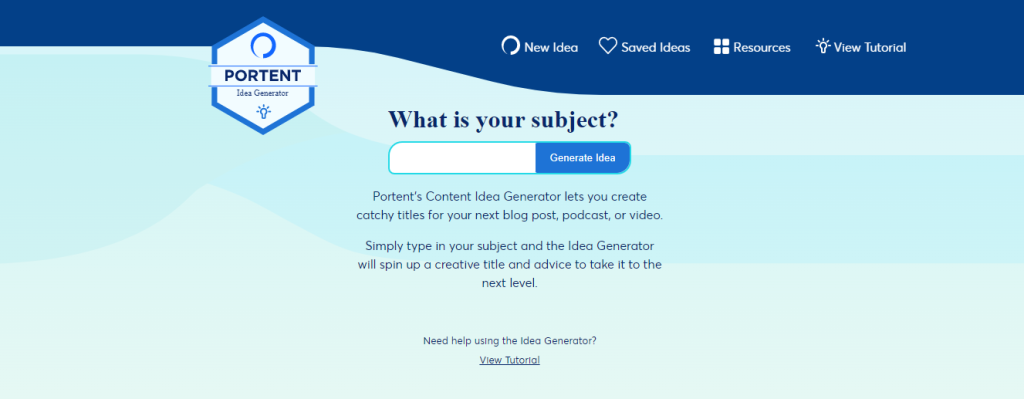
Portent’s Content Idea Generator: Portent’s tool generates creative and attention-grabbing blog title ideas. Simply enter a keyword or topic, and it will offer you unique and engaging title suggestions to spark your creativity. Portent’s tool generates creative and catchy blog title ideas. Simply enter your subject or keywords, and it will generate intriguing and engaging titles. You can try it out at:Portent's Content Idea Generator


Final Words:

The success of a blog post depends on how you communicate your ideas, but its success also largely depends on a catchy title. A good title should capture the essence of what you’ve written about and entice people to read your post.

Use punctuation and structure to make it easier for your readers to read and understand what your title means. For example, using commas and hyphens in place of long words will create a more visually appealing title. For example, “10 Super-Simple Tips” is much easier to read than “10 SupersimpleTips”. Making sure your title flows well and is easy to understand goes a long way in getting people to click through to read your post.

The Importance of Storytelling in Content Marketing

Taking storytelling to the next level, content marketers can use this same emotive power to reach their target audience by weaving an engaging narrative through their content. By understanding and harnessing the art of storytelling, businesses can better captivate their audience and keep them coming back for more. In this article, we’ll examine the importance of storytelling in content marketing and why incorporating it into your business strategy has become essential.

Why is storytelling in content marketing important?

When we tell a story, we are creating an emotional connection with our audience. We’re able to transport our readers to a different world and give them an experience that is more immersive and engaging. Storytelling helps us to form a bond with our readers, which is something that facts and numbers can’t really do.

Storytelling also gives our content depth. When we tell stories in our content, our readers feel more connected to the message we’re trying to convey. We’re able to make our content more interesting and more personal, which can help to make our content more memorable and relatable.

The Importance of Storytelling in Content Marketing

Storytelling allows us to engage our readers on a different level. When we tell stories, we are able to evoke emotions like joy, anger, and sadness, which encourages our readers to take action.

Content marketing helps us stand out from the crowd and capture our readers’ attention. It allows us to connect with our readers and build relationships. So, start telling stories and get creative with your content!

What makes your business unique?

When telling stories for content marketing purposes, it is important to focus on qualities that make your business unique. This will help you stand out from the competition, connect with your readers, and create a strong and lasting impression.

What makes your business unique? Think about what sets it apart from other businesses in your industry. This could be something like your customer service policy, sustainability initiatives, product designs, or business model. Whatever it is, make sure to highlight it in your stories.

You should also showcase the core values of your business. In other words, what are the guiding principles that you live by in order to build a successful and ethical business? These core values should be reflected in all areas of your business and incorporated into your stories.

You should focus on telling stories about the impact your business has had. Talk about the successes of your customers, the challenges you’ve overcome, and the unique experiences you’ve had in pursuit of your goals. These stories will help your readers to see how your business is making a difference.

Finding your business community

When telling stories for content marketing and storytelling purposes, it is also important to focus on the audience and community that you’re bringing together. Create stories about how people have connected through your brand, and the different ways that your business has created meaningful relationships between customers.

This could include stories about people meeting at a sponsored event, customers writing about their experiences with your products or services, or stories about how your company connected different communities. It’s also a great opportunity to showcase the ways that you’re giving back to your community, whether through donations or volunteering.

You can also use stories to help potential customers understand the benefit of being part of your community. These could be stories that focus on the support they’ll get when they join, the unique content they can access, or the exciting opportunities that you’ll be offering.

Telling stories about your community will help to build relationships and trust, and create a deeper connection between your business and its customers, partners, and stakeholders.

Storytelling in Content Marketing

Giving your community a platform

Giving your business community a platform is essential for the success of your content marketing and storytelling efforts. When you create a platform specifically to showcase the stories of your community, you open up an entirely new avenue to reach potential customers and make meaningful connections.

A platform should also provide people with an easy way to share their stories with others. This could include a blog, podcast, or video series that features customer successes or stories from within your community. You could also use social media to give people the opportunity to tell their stories and find others in the same boat.

Another benefit of creating a platform is that you can collect stories from people directly on the platform, rather than relying solely on word-of-mouth from customers. This gives you the ability to find new stories and receive instant feedback on how people are using or enjoying your product or service.

By giving people the opportunity to share their stories and experiences, you can both strengthen your business community and boost your content marketing efforts to a new level.

Your small business community is your advocate

Your small business community is your biggest advocate and champion. A good way to tap into their support is to encourage them to share their stories with you. By giving them an open forum to tell their stories, their voice will be amplified to reach a much bigger audience.

Encourage your customers to engage with you on social media. Ask them to share their experiences on their own platforms, such as YouTube, TikTok, and Instagram. You can also encourage them to use specific hashtags, such as #MySmallBusinessStory, to draw even more attention to their stories.

You can also create blog posts and other content around your small business community to show the world the stories they have to tell. This content can range from short stories to interviews of customers who have had success with your products and services.

By embracing the stories of your small business community and empowering their stories, you can create a strong message that resonates with potential and existing customers alike.

To wrap things up

It is essential to remember that stories are an invaluable asset when it comes to content marketing. They make customers feel heard and deepen their connection to your brand. Stories can be shared time and time again and have a powerful impact on your audience.

While creating stories for your content marketing shouldn’t be daunting, having a plan in place is key. Not only will it help ensure that your stories are targeted and engaging, but it will also help to put it into context.

Once you understand the power of storytelling, you can use it to build customer relationships, amplify customer voice, and create powerful content that resonates with your audience. If you follow these simple steps, you can start creating your own stories for your content marketing efforts and take your customer experience to the next level.

What is Content Marketing? – Complete Guide for Beginners

Digital marketing is all about communicating with your target audience over the Internet. Content marketing is one of the advertisers’ most effective consumer interaction strategies.

Many individuals and organisations competing for the attention of online consumers wonder how digital and content marketing fit together in such an ever-changing digital environment. So, what exactly is content marketing? Let’s start with a closer look at content marketing and then explore its different types.

What Is Content Marketing?

Content marketing is a strategic marketing method that entails developing and sharing valuable, relevant, and consistent information in order to attract and maintain a certain audience. Because much content marketing is now developed and shared online, it is sometimes called a digital marketing strategy.

What Is Content Marketing?

This type of marketing does not directly promote a brand but increases consumer interest in its product or service. The premise is that the more value you provide consumers in the form of expert knowledge, the more likely they will buy your goods.

The primary goal of content marketing is to provide value to the audience by delivering information, education, or entertainment that addresses their interests, needs, and pain points.

The content is typically created and distributed by brands, companies, or organisations to build relationships with their target audience, establish thought leadership, increase brand awareness, generate leads, and ultimately drive profitable customer action.

Effective content marketing requires deep understanding of the target audience’s behaviours, preferences, and motivations. It also requires a solid content strategy, a well-defined brand voice, and a commitment to creating high-quality, engaging content on a regular basis.

Why Does The Organisation Have to Use Content Marketing?

In this digital world, most organisations now use content marketing strategies to explore their product for customers. Organisations use content marketing for various reasons, including:

Attracting and engaging target audiences

Content marketing enables organisations to provide valuable, relevant, and interesting content that attracts and engages their target audience. This helps to build brand awareness, establish credibility and trust, and increase the likelihood that the audience will become customers or advocates of the organisation.

Attracting and engaging target audiences

Establishing thought leadership

Organisations can establish themselves as thought leaders in their industry or niche by creating and sharing high-quality, informative content. This can help to enhance the organisation’s reputation, increase its visibility, and differentiate it from competitors.

Building relationships with customers

Content marketing can be used to build and maintain relationships with customers by providing them with valuable information and resources that address their needs and interests. This can help to increase customer loyalty, satisfaction, and retention.

Generating leads and sales

Content marketing can be used to generate leads and sales by creating quality content that addresses potential customers’ needs and pain points. This can help to attract qualified leads and increase the likelihood of converting them into customers.

Enhancing SEO and website traffic

By creating and sharing high-quality, keyword-rich content, organisations can improve their search engine indexing and rankings, drive more traffic to their website, and increase the likelihood of attracting new customers.

Content marketing is a powerful tool that organisations can use to achieve a wide range of business goals, from building brand awareness and establishing thought leadership to generating leads and driving sales.

Types of Content Marketing

In terms of continuous content marketing tactics, digital marketers now have a lot of possibilities. Here are some of the most common methods of content marketing to assist you in achieving your objectives.

Blog Content Marketing

Blog content marketing involves using blog posts as a strategic marketing tool to attract, engage, and convert a target audience. A blog is a regularly updated website or section of a website that typically features articles, posts, or stories written in a conversational style.

Blog Content Marketing

To be effective, blog content must provide value to the audience by addressing their interests, needs, or pain points. This requires understanding the target audience’s behaviours, preferences, and motivations. The content must also be relevant to the brand or company and support its goals and objectives.

Video Content Marketing

Video content marketing refers to the use of video content in a strategic marketing approach to promote a product, service, or brand. The video has become an increasingly popular and effective medium for content marketing, as it allows marketers to convey their message in an engaging, entertaining, and informative way that resonates with their target audience.

Video content marketing can take many forms, such as product demos, explainer videos, brand stories, customer testimonials, animated videos, social media videos, and more. The content is typically created and distributed across various channels, including a brand’s website, social media platforms, email campaigns, and paid advertising.

The benefits of video content marketing include increased engagement, higher conversion rates, improved SEO, and stronger brand awareness.

Video content has been shown to capture viewers’ attention more effectively than other forms of content, and it is more likely to be shared on social media, thereby increasing the reach of the brand’s message.

Effective video content marketing requires a clear understanding of the target audience, a well-defined message, and high-quality production values. It is also important to measure the performance of video content using metrics such as views, engagement, and conversions and to optimise the content strategy based on these results continually.

Email Content Marketing

Email content marketing is a type of content marketing that involves using email to communicate with customers and prospects, with the goal of building relationships, nurturing leads, and driving sales.

Email Content Marketing

The key to effective email content marketing is to provide value to the recipients through relevant and engaging content. This can take many forms, such as newsletters, promotional offers, educational content, and customer success stories.

To create effective email content, it’s important to segment your email list based on interests, behaviours, and preferences and tailor your content to each segment accordingly. It’s also important to use a clear and concise subject line to grab the recipient’s attention and to optimise the content for readability and engagement.

Infographics

Infographics are an effective form of content marketing that uses visual elements, such as charts, graphs, illustrations, and images, to communicate complex information in a concise, easy-to-understand format. Infographics are often used to simplify data and statistics, break down complex processes, explain concepts or ideas, or compare and contrast different products or services.

Infographics can be highly shareable and help increase brand awareness, drive website traffic, and improve social media engagement rates. They are also an effective way to establish thought leadership and position a brand as an expert in a particular industry or niche.

To create an effective infographic, starting with a clear idea of the message or information you want to convey is important. You should also understand your target audience, their interests, and the visual elements that are most likely to resonate with them. Once you have this information, you can start designing your infographic using a tool like Canva.

When creating an infographic, it’s important to use clear and concise language, focus on key takeaways, and avoid cluttering the design with too much information. You should also ensure the infographic is visually appealing and easy to read, with a clear information hierarchy and a consistent colour scheme and style.

Finally, don’t forget to include your brand logo and a call to action that encourages readers to engage further with your brand.

Final Thoughts

You can use efficient content marketing to reach your target audience and enhance conversions. There are various ways to use content marketing to increase income, increase brand awareness and recognition, and establish relationships with prospects and consumers. Don’t forget to provide value to every piece of content you create.

We hope this blog gave you the basic information about content marketing and its types. We will explore the different types of content marketing strategies and approaching methods in the upcoming blogs.

The Role of Content Marketing in SEO:How to Create High-Quality Content?

In SEO world many people believe that SEO is all about backlinks and keywords, but the truth behind the successful SEO is Content. The phrase “Content is King” in true in SEO. Without quality content, your website will struggle to rank higher on SERP. In this blog, we will discuss the importance of content marketing in SEO, why it matters and how to create high quality content  that will not only improve your search engine ranking but also engage your target audience. Here are some tips on role of content marketing and how to create high-quality content for SEO

The Importance of Content Marketing in SEO

Content marketing is essential for improving a website’s visibility in search engine results pages (SERPs) and is an integral part of any successful SEO strategy. Creating quality content that is optimized for SEO should involve incorporating keywords in appropriate places, making sure content is original and of high-quality, and providing value to the reader. It’s also important to ensure that content is properly structured and linked to other relevant content. Building relationships with other websites, such as through link-building, is also an important part of creating effective SEO content.

By following the below mentioned tips, you can create content that will help your website rank higher in search engine results pages.

The Importance of Content Marketing in SEO

Tips to create Quality content

Quality content can help boost organic rankings by providing value to users and increasing the relevancy of a website. Content marketing is an essential part of any successful SEO strategy. Thus, it is important to create high-quality content that will help your website rank higher in SERPs. To do so, start by researching relevant topics in your industry and crafting unique pieces that offer value to readers. Additionally, use relevant keywords strategically throughout your content, as this will help boost the relevancy of your website in the eyes of search engines. Lastly, make sure that the content is optimized for readability and navigation, as this will ensure that visitors have a great user experience. With these tips, you can create content that not only helps your website rank higher but also engages visitors.

  1. Research your audience

Before starting working with content, you need to understand your target audience. So, focus on who are your audience and their interests. Utilize tools like Google Analytics, surveys, and social media listening to gather insights about your audience.

  1. Quality Matters

Always focus on creating a quality content over quantity. Create informative and engaging content relevant to your audience by using a focusing keywords instead of including meaningless phrases.

  1. Include Keywords

Use only relevant keywords in your content in a natural way. Make sure you are not overdoing it by using more keywords.

  1. Structure your Content

Make your content easy to read and understand by your viewers. Use proper headings, subheadings and bullet points to break up your content and make it easier to read. Also, use short sentences and paragraphs.

  1. Use Quality images

Visuals like images, videos, and infographics can help to break up your content and make it more engaging.

  1. Promote your content

Share your content on social media, email newsletters, and other channels to attract more visitors to your website.

  1. Monitor and measure

Use tools like Google Analytics to track the performance of your content. Monitor metrics like page views, bounce rate, and time on page to see how your content is performing and make adjustments as needed.

This helps to ensure that search engine algorithms understand the relevance of your website and can rank it accordingly on SERPs. With the correct content in place, you can improve your search engine rankings and attract more targeted traffic to your site.

Write a content for Your Target Audience

It is essential to identify your target audience before creating content. Understanding who your audience is and what they’re looking for will help you create content that resonates with them. Content marketing is an essential part of any successful SEO strategy. When it comes to content marketing, it is important to create content with keywords and phrases that are relevant to your target audience and also focus on quality, not quantity.

Write a content for Your Target Audience

Make sure you are crafting content that provides a valuable resource to your audience. Additionally, creating content that is easily shareable is key for a successful content marketing and SEO strategy.

Research what kind of content your target audience is already engaging with and use this information to guide the type of content you create. This will ensure that the content is highly relevant and engaging to the users who are already searching for it. Keeping the content up to date with the latest trends and topics is also important for SEO.

Additionally, you should focus on creating content that is well written, well researched, and properly optimized for SEO. This means including relevant keywords and phrases, writing in a style that is easy to understand, and using clear headlines and subheadings. By doing this, you can create content that is both SEO-friendly and engaging to readers.

Thereafter, understanding your target audience is paramount to success when creating content for SEO. By crafting content that is tailored specifically to their needs you are more likely to engage with your readers, fostering a deeper relationship, and improving the performance of your SEO.

Don’t forgot to Analyze the Performance of Your Content

Analyzing the performance of your content is essential to understanding what works and what doesn’t when it comes to SEO. Keeping track of metrics like page views, time on page, and bounce rate will give you a better idea of what content is resonating with your audience. Additionally, it’s important to take into account the keywords and phrases that are being used in your content. By tracking what keywords and phrases are getting the highest search volume, you can create content that’s optimized for search engine algorithms. This will help your content rank higher in SERPs and get more visibility in the long run.

Analyze the Performance of Your Content


You should use metrics such as organic traffic, time on page, and bounce rate to determine which pieces of content are performing the best. These metrics can provide valuable insights into how your content is performing with regards to SEO, allowing you to make adjustments accordingly. Additionally, keeping up with the latest trends and developments in the SEO space will help ensure that your content is always up to date and optimized for search engines.

Finally, make sure to use relevant keywords in your content and incorporate them into headlines and titles, as this will help your content rank higher in search engine results pages (SERPs).

Besides creating content that’s relevant to the audience, A/B testing can be incredibly useful for optimizing SEO. It involves publishing two different versions of a content piece and then analyzing the results from each version. This will help you measure how your users interact with each version and then you can use that data to decide which content is generating more engagement and better SEO results. A/B testing can help improve your SEO by providing valuable information on which type of content works best for your website’s visibility in SERPs.

 Final Words:

Creating high-quality content isn’t always easy but if done correctly it can pay off big time in terms of increased traffic & visibility from search engines like Google & Bing plus improved engagement levels among potential customers visiting your website! Follow these tips above & start seeing positive results soon enough!